

We’ve all encountered it before , you running freely down the road and all of a sudden your ankle decides to bend inwards while the rest of your body goes over it! You feel that sudden pop and click inside your joint and it’s at that moment that you know – you have just torn your ankle ligament! What a terrible feeling , bringing an array of unwanted setbacks to you and your training program.
Ligaments are the connectors of the body. They provide stability , restriction and strength to our joints. Having a torn ligament is not an uncommon injury although the recovery , rehabilitation and treatment thereof can be tricky waters if you do not know what you’re doing.
Fortunately for you , we know all about ligament tears and wrote this piece with you in mind! We will go through all the particulars relating to your ligament tear , what to expect , how to manage it and what not to do! So get comfortable , take a break and lets get into your ligament tear.
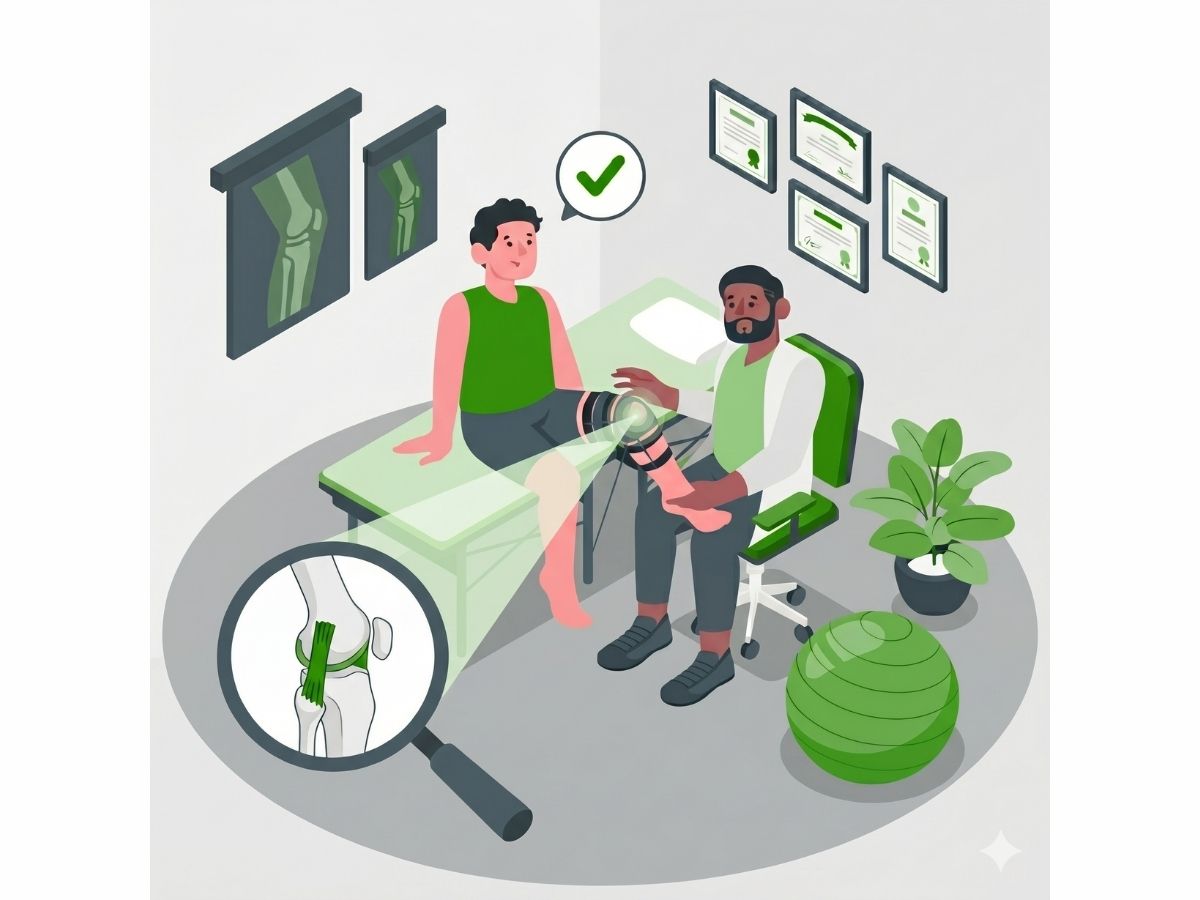
The Pathophysiology of a ligament tear & how did it happen?
Ligaments are the connectors of the body , enabling your joints to be sturdy , movable and restrictive to ranges they are not supposed to go into. There are around 900 ligaments throughout your body and are made up of special protein fibres called collagen. Being formed in a crosslink pattern , collagen fibres are dense ,strong and well supplied by blood vessels. We can think of ligaments being the tight ropes of the body , connecting bones to bones. Collagen proteins further gives ligaments their ability to be strong , robust and flexible enabling you to perform movements without your bones falling apart.
However , sometimes you mange to tear your ligaments as the amount of force coming through your joint outweighs the strength of your ligament fibres , therefore resulting in an over-stretch of your ligaments fibres and inevitability a ligament tear. Lest break this down and further explain how a ligament tear happens using a common ankle injury.
As you attempt to land from a jump and suddenly misstepped , your foot goes underneath you. The lateral ligament of your ankle will try to restrict your foot from bending too much inwards although when the force is too great for the ligament to handle it results in the collagen fibres being sheared , torn or completely broken off. As this occurs , the ligament fibres are literally pulling apart. This causes a reaction in the body whereby internal bleeding causes pain , swelling and inflammation at the injured site. Theoretically the more fibres that are torn , the more pain , swelling and discoloured your ankle will be although this is not always the case , therefore getting it assessed correctly is imperative.
Repetitive ligament tears
Spraining your ligaments more often , will result in a decrease in the tensile strength of the injured ligament. Without the proper rehabilitation and isolated treatment on the ligament , the healing scar tissue will not align correctly in their crosslink formation resulting in further complications. Secondary complications apart from pain , stiffness and inflammation will be repetitive ligament tears. This will continue to occur as your joint will be unstable and not have the stability of the ligament being able to restrict end range movement.
Get the help you really need
Medical professionals that care about you

Types of Torn Ligaments
Gr 1 (Small Tear)
- Discomfort, niggling pain
- No bleeding
- Minimal swelling
- Unrestricted movement
- Pain at end of the stretch
- Able to put weight on leg, tender
- Physio
Gr 2 (Incomplete tear)
- Mild to severe pain
- Always bleeding present
- Mild to severe swelling
- Pain through the range]
- Pain through the stretch
- Unable to put weight on leg
- Physio
Gr 3 (Complete Tear)
- Can be pain fee(due to nerve injury no pain is felt)
- Severe bleeding and bruising
- Severe swelling
- Pain free
- No resistance in stretch, continue to move past its normal range
- Visible deformity, unable to put weight on leg
- Hospital/ Doctor
How severe is my ligament tear….?
The severity of your ligament tear will differ in relation to the type of tear you’ve sustained. This varies amongst individuals and will also present differently. Fortunately based on how many fibres of your ligament are teared , we can grade them accordingly. Lets have a look at a basic example of a lateral ankle ligament tear and how it differs across the varying grades.
Grade 1
As you misstepped and your ankle turns inwards , you feel a small nudge and think nothing of it. As you wake up the following morning you notice some symptoms beginning in your ankle. You have some morning stiffness as you put weight in your foot but still able to walk effectively. Your joint does not feel unstable but you can feel there’s some discomfort within the ankle. The longer you walk or stand the more uncomfortable it gets , but you’re still able to drive , climb stairs and get your shoes on with mild discomfort. These symptoms disappear when resting and there is no discolouration , only slight swelling on the outside of your ankle. This is indicative of a mild Gr1 ligament tear as your ligaments overstretched when misstepping , although your joint is not unstable , has a firm end feel to it and you’re still functional. It can be thought of about 20% shearing of your ligament fibres.
Grade 2
As you misstepped , you feel a significant discomfort and click inside your ankle. This is then followed by a sudden onset of pain followed by swelling. You cannot continue and have to get rest as it’s too painful to walk on , you may even need crutches or a moon. boot to aid you mobilising. As you wake up the next morning you notice moderate swelling around your ankle joint as well as discolouration along your pinky toe , under the foot and over your ankle joint. You struggle putting weight on your foot and is very stiff to move. The pain does not subside with rest and tasks such as driving , putting your shoes on or climbing stairs are extremely painful and ineffective for you. The pain also seems to be spreading to your achilles tendon and calve muscle. Being more severe and painful as your ligament overstretched and tore more fibres , which can be thought of between 40% – 60% thus causing more internal bleeding inside your joint. Your ankle joint feels unstable , painful to move through it’s range although there is still a firm boney end feel if stressed to it’s end-point. These are all indicative of a Gr2 ankle ligament tear.
Grade 3
As you misstepped , you feel a burst of pain , shock and a click inside your ankle joint. It suddenly becomes red , swollen and extremely painful. You are unable to move it in any direction and need assistance moving or even just standing up. The pain does not ease throughout the night and upon waking up you notice swelling the size of a golf ball on the side of your ankle. Your entire foot is discoloured along with a feeling of instability when trying to stand up on your ankle. You will not be able to walk without a crutch and tasks such as driving , putting on your shoes and climbing stairs are impossible. The pain has now spread to your entire soul , and does not go away regardless of what you do. When stressed to it’s end range , you feel as if your ankle can move even further as it does not have that firm boney end feel anymore. This is due to a much more significant amount of fibres being torn (80% – 100%) , causing massive internal bleeding, joint restriction , pain and swelling. The ligament tear therefore needs to be assessed and immobilised immediately to rule out any bone fractures. This should not be taken likely and needs to be attended to immediately.
Get to the root cause of your problem
Our team of experts guide you to heal
Diagnosis
Physiotherapy diagnosis
Physiotherapy diagnoses for your ligament tear is not a death sentence and should be an easy , uncomplicated and well understood process. Luckily , we are experts at this and through our knowledgable , calm and guided approach we can confirmed or rule out your ligament tear.
We are able to isolate and break down the affected joint and ligament tear in order to get the best possible clinical presentation of you. Lets have a look at the thorough steps we will guide you through as we identify and confirm your ligament tear:
Subjective Assessment
This entails a brief conversation about you how you sustained your ligament injury , any relevant previous history , any medication or chronic conditions you may have as well as an extremely thorough presentation of your symptoms regarding your ligament tear. The better we understand this , the better and easier we are able to plan your rehabilitative journey. Another important aspect of this is to go through your goals and expectations as we strive towards getting you back into the tasks that are important to you.
Physical Assessment
This is where we assess your physical ability in relation to your ligament tear. We are able to isolate and measure your joint mobility or restriction , muscle strength and ligament strength as well as the severity of your ligament tear. Through our special ligament testing capabilities we are able to establish the severity of your ligament tear. We go further by assessing how it implicates your other musculoskeletal structures by assessing surrounding swelling, discolouration , joint laxity and muscle strength. Once we able to objectively tick these boxes we are now able to successfully commence your rehabilitative journey. If we suspect any further investigations , we are able to provide you with a referral to get it done. We are proactive on our approach and pride ourselves in taking responsibility as your primary health care provider.
We understand how the body works and know how to mitigate any secondary issues that may arise when having a ligament tear. Allow us to take on that responsibility while you focus on a structured rehabilitation program to get you back to your best.
X-rays
Torn ligaments cannot be seen on an x-ray, so it will not be effective in diagnosing a ligament tear. X-rays will however , exclude any bone fractures and boney abnormalities that could be suspected with a severe ligament tear. If we suspect this , we are able to refer you for an X-ray.
Your physiotherapist can refer you to get x-rays taken if necessary.
Diagnostic sonography
Diagnostic sonography (Sonar scan) is one the easier and best preferred choices in diagnosing your ligament tear. By assessing the fibres of your ligament , we are able to confirm the presence of a ligament tear. Being the experts we are , we have in house sonographer should we need to exclude other suspicions or to simply confirm the severity of your ligament tear.
If you need an ultrasound, your physio will refer you.
MRI
An MRI scan will be first prize in diagnosing your ligament tear. Although very expensive , it can image all of the structures in your injured site. Thus showing us the extent of your ligament tear as well as your bones , muscles and tendons surrounding your ligament tear.
This is only necessary in severe cases or traumatic injuries whereby multiple sites need to be examined.
If your physiotherapist suspects anything more than just a ligament tear, you will be referred to the right specialist for an MRI.
Why is the pain not going away?
When your ligament tears , we can expect the shearing of the ligament fibres , resulting in internal bleeding , swelling and pain inside the joint. This however , does not happen in isolation as there are many other structures that are effected as well. Your muscles , tendons and bones may very well be affected as well. Due to the nature of this injury , the torn ligament fibres will need to regrow , readapt and get it’s ability to provide adequate tensile strength and stability to limit the joint again. The same can said for your joint stiffness and muscle weakness. If these measure are not correctly met , you will certainly still experience symptoms long after you’ve sustained a ligament tear.
If you go around “waiting and seeing what happens” , you are simply setting yourself up for further complications. Fortunately some healing will occur although rest will only aid your healing to a certain extent. In order for your torn ligament fibres to grow back stronger they will be need to be loaded. Loading refers to rehabilitation and hands on therapy as the optimal amount of therapeutic administration is where the magic occurs , not just for your torn ligament but for the secondary issues as well.
If this does not occur , your ligament , joint and muscle will fall short in it’s ability to perform. This then leads to chronic scar tissue , inflammation and starving your ligaments of the nutrients needed. You then become stuck in a vicious cycle of pain and chronic inflammation which leads to further compensation and limited functional abilities. This makes your recovery even tricker to navigate and delays your full unrestricted return to function.
Do not set yourself up for failure by delaying your rehabilitation. We are experts at this , so instead of delaying your return – let us be proactive and get your ligament tear fixed up sooner rather than later!
Problems we see when patients come to us with a torn ligament
Immobilising for too long
If you have sustained a high grade ligament tear your corresponding joint would certainly have to be immobilised in a sling , cast , brace or moon boot. Although rest and immobilising is of upmost importance in the initial phase of healing , too much immobilisation will cause massive complications. Keeping your ligament immobilised for an extended period will cause a huge amount of scar tissue build up within the joint. These tissue needs to mobilised as if it does not , it will cause pain , joint stiffness , swelling and limited your function. Your surrounding muscle will begin to fade as you’re not using it as needed , which causes further muscle atrophy and weakness. Immobilisation needs to be optimal and a balance is needed in order to start loading the torn ligament. We are experts at this process so why would wait and keep it immobilised for longer than what is needed.
Recurrent ligament tears
If you’re battling with recurrent ligament tears or strains , chances are that you’re falling short in your rehabilitative approach or there’s a bigger compromise elsewhere in the corresponding joint. Sustaining recurrent ligament tears is a sign instability within the ligament and joint as the ligament is not able to act as a joint stabiliser or limit it’s end range movement. A ligament that repetitively tears becomes gradually become weaker and unstable. Thus causing further pain , stiffness and swelling in the joint. Without the adequate assessment and rehabilitation it will lead to further complications such as unwanted scar tissue formation , infection and eventually surgery.
Complex regional pain syndrome
Complex regional pain syndrome (CRPS) is a consequence of failing to treat a torn ligament. Misunderstood to the medical fraternity , it can affect any structural part of the body. It is a chronic issue whereby a injury sustained develops into a worsening state over time. Keeping to a torn ligament , CRPS develops whereby the ligament is always hypersensitive as well as being painful , stiff and limited in it’s use. It may also begin to entrap and affect your nerves , resulting in a neurological fallout. This is dangerous as the pain does not match the severity of the torn ligament and more importantly – it is not an acute condition. Thus meaning , your ligament by virtue of time alone , should be healed although your symptoms will be as you have just torn it again. Let us avoid this by guiding you through a thorough assessment and treatment plan before it becomes chronic.
Physiotherapy treatment
When it comes to physiotherapy treatment , we certainly do not mess around. Being confident , calm and systematic , we administer a guided approach to establish the extent of your ligament tear. Once we are able to establish the extent and nature of your ligament tear , we can begin our Physiotherapy treatment which entails an array of well researched and evidence based modalities , techniques and optimal exercise guidance to aid you through your rehabilitative journey.
With any ligament tear there will always be secondary issues such as joint stiffness , pain , muscular compensation as well as weakness. We are able to mitigate these issue by being thorough in our approach to ensure that we can solely focus on your ligament tear.
With our expert guidance and knowledge we base our Physiotherapy treatment on your specific needs as we walk you through each healing phase , beginning with the important first step to lay down a solid foundation for us to build upon. We are able to actively remodel your ligament tear by making use of our world class facilities in which we use passive and active techniques such as ligament mobilisation, laser therapy , strapping , dry needling and exercises prescribed to optimally load and unload your ligament tear accordingly. As you get better , you will be able to do more and so will your ligament tear , thereafter we gradually increase your capacity and function by furthering your endurance , stability and ligament tensile strength while guiding you back into your activities.
We are experts in our field and have extensive experience in helping you achieve your objectives. We are refreshing , clinically brilliant and professionals in how we go about our business. Allow us to get you back to where you need to be while educating , managing and instilling a level of confidence you or your torn ligament were not aware you had.
Phases of rehabilitation
Rehabilitation of your ligament tear will consist of 5 Phases. We begin by setting down the foundation to build upon. Focussing on the optimal amount of loading we will ensure that your rehabilitation journey is smooth , effective and clinically to the highest level. We are able to navigate your journey through a systematic approach whereby we plan , intervene and progress you according to your set objectives.
1st Phase: Protect , educate and rest (Week 0 – 2)
Protect, educate and rest
We believe that spending the necessary time to educate you about your ligament tear, how to best manage it and how to mitigate any flare up symptoms you may still have is imperative to your recovery. The more you know about your ligament tear and better you understand it – the easier it will become managing your ligament tear. These protocols will involve how to keep the affected ligament elevated , iced and immobilised in order to protect it in these early stages. We are able to safely guide you through this process as well as to make you aware of why a slow integration is necessary.
Medication
Weaning you off medication as soon as possible is always what we strive for in the first phase. Navigating the type of medication can be tricky if you do not know what is appropriate and which is not. We would always want to prevent any secondary issues that can inhibit your recovery time such as stomach ulcers , constipation or drowsiness. We are experts at weaning you off your medication and will safely advise you how to go about doing so.
Mobility and muscle foundation
If you are on crutches or in a sling , we will advise and guide you on the process of how to wean off them. The associated limb and joint that the ligament connects to will certainly become stiff and immobile so knowing which movements are safe and which are not , is a process our experts are able to navigate you through. In this phase we would want to gently start passive and active movements to slowly introduce movement back into the joint. Muscle strengthening exercise’s such as isometric contractions will be started at a very basic level to begin fibre contraction and blood flow.
By the end of this phase you should be able to:
- Gain the ability to weight bear (Lower limb ligament tear).
- Decrease in swelling , discolouration and tenderness.
- Able to move your associated joint with limited pain.
- Able to hold a isometric muscle exercise for at least 6 reps (3 sets) of 15 seconds.
2nd Phase: Cellular stimulation (Week 2 – 4)
As you are now able to do a bit more , we can start integrating further protocols to enhance the healing of your torn ligament. We call this the cellular stimulation phase as in this phase we would like to stimulate the cellular regeneration following phase 1. At a cellular level , the ligament will begin to form scar tissue by means of fibroblastic cells. We aid these new forming ligament fibres by applying an array of different techniques such as scar tissue mobilisations , laser therapy and optimal exercise loading. We can now increase the movement of your affected joint by getting it more mobile but still within your prescribed limits. Exercises for muscle strengthening will be progressed from the previous isometric pattern into a concentric movement.
By the end of this phase you should be able to:
- Move your ligament through range with a perceived pain scale of no more than 5/10.
- Swelling and discolouration resolved.
- Able to fully weight bear (Lower limb injury) or remove your sling within limits.
- Regain your functional capacity such as walking and getting dressed.
3rd Phase: Remodelling and readapting (Week 4 – 8)
In this phase we will build upon the phases you had been through. By this phase your torn ligament will be ready to be loaded even further by being able to withstand more force. Focus is centred around remodelling the fibres of the “new” ligament. This is followed by readapting the ligament to withstand tensile forces coming through the joint. We achieve this by guiding you through a tailored rehabilitation program to ensure that you’re pain free on movement and strong enough to increase your functional capacity. If your joint was immobilised such as in a sling , cast , moon boot or crutches , this is the phase in which we will achieve you being weaned off it completely.
By the end of this phase you should be able to:
- Perform a pain free contraction through movement of at least 6 repetitions of 3 sets.
- Integrate into further functional activities such as driving and returning to the gym within your specific limitations.
- Able to perform body weight exercise’s such as a squat or modified wall push up.
4th Phase: Restrengthening (Week 8 – 12)
We can now begin to integrate you towards your end stage objectives. We will increase the type and intensity of your exercise program to ensure that we can further your endurance and strength. Returning to your “normal” activities will be achieved in this phase , which will be done at a steady pace. We do not want to overload the previously torn ligament , so working within the ligaments threshold is important.
Increasing the tensile strength of your ligament is achieved by performing higher loading exercises. These can be thought of not just explosive movements but increasing resistance as well. By doing so we are able to slowly build up the tensile resilience of your ligament , joint and corresponding muscle as we approach the final clearance phase. By the end of this phase you should be able to:
- Have integrated into a introductory plyometric (explosive) movements.
- Returned to training / gym within your limitations.
- No pain or discomfort with any exercises or movement patterns.
5th Phase: Return to normal life (Week 12 – 16)
Returning to normal life and full capacity is what phase 5 is all about. These final weeks are to put all the previous weeks into test. As medical clearance does not occur quickly , we use these weeks to try , test and retest the end stage activities that are set out in phase 1. By doing so , we are able to expose your previously torn ligament to the type of activities that you expect them to withstand as well as getting feedback from your ligament . This is imperative before making a full return to your activities as without it , you will not have the confidence and peace of mind needed to perform at your highest level of function.
By the end of this phase you should be able to:
- Know which movements and exercises are important for you to ensure you maintain your progress.
- Fully integrated back into your activities without any pain or discomfort.
Healing time & other forms of treatment
Healing time for a ligament tear varies amongst different individuals. Numerous predisposing factors play a role in your healing process , which directly affects your rehabilitation progress and ultimately your return to function. Lets have a look at the healing time amongst ligament sprains based on their severity:
Mild
A mild (Grade 1) ligament tear is usually considered to be the “quickest” return the recovery as the amount of collagen fibres that are sprained are below 40%. This is not long lasting and heals between 1 – 4 weeks , with a full return to capacity around 6 weeks.
Moderate
A moderate ligament tear is considered to be between 40% – 60% of torn collagen fibres , although the ligament is still intact (Grade 2 tear) it is still considered to be an incomplete tear. This is a bit more complex as the joint would need to be immobilised as well as an catering for an increase in symptoms such as joint instability , bruising and swelling. Given these symptoms , healing occurs between 6 – 12 weeks. , with a full return to capacity around 12 – 18 weeks.
Severe
In a severe ligament tear , there is a complete tear of the muscle fibres (Grade 3) . If in isolation and no surgery is followed healing time can be anywhere between 18 – 26 weeks. The same time frame can be expected following surgery although it can take up to 12 months for a full return to function.
Given our expertise , we are able to accelerate your healing process by implementing or referring you for an array of different types of treatment protocols. By being able to identify your needs and end goals we strive towards your objectives not only within our scope of practice but by reaching outside the box and identifying different forms of treatment.
Lets have a look at some of our strong alternative and additional forms of treatment that can aid us in your rehabilitation journey:
If need be , a referral to your local GP will aid us in the appropriate medication for your healing and rehabilitation process. These could consists of analgesics , muscle relaxants and anti-inflammatories.
- Nutritional and supplements. Within our domain we are able to guide you through the process of supplements and nutritional advice to accelerate your healing process.
- High intensity laser therapy to aid blood flow into your torn ligament resulting in an decrease in swelling and increase in healing.
- Infiltrations. Cortisone injections are a popular mechanism of treatment , enabling a decrease in inflammation of the ligament.
- Platelet replacement therapy (PRP). PRP therapy is issued by one of our sport physicians in which we are able to draw your own blood , using it to develop a high concentration of oxygen rich platelets and infiltrate it back into your blood stream. This is a safe procedure and increases your healing time significantly.
Is surgery an option?
Having surgery on a torn ligament is common. Surgery becomes a necessary intervention dependant on the location , severity and clinical importance of the specific ligament you have torn. As ligaments provide stability and restriction to a joint , these effect it has on these factors contribute to whether surgery is needed or not. If these checkboxes are not met then sometimes it is not necessary for surgical intervention. An example of this would be an ankle sprain. A Grade 3 ATFL sprain in isolation rarely gets operated on , although if the CFL , PTFL and ATFL all sustain high grade tears – then surgery is needed to provide the ankle joint stability again. Non – surgical rehabilitation is always the first choice when it comes to the rehabilitation of a isolated ligament tear.
Lets have a look at some of the surgical indications that would be necessary before opting for a surgical intervention:
- A complete ligament tear (Grade 3) that has retracted more than 2-5mm from it’s site of origin or insertion.
- A grade 3 tear in a ligament that provides stability to a joint , such as your ACL.
- Repetitive or reoccurring injuries to a specific limb. This compromises your ligaments ability to protect , limit and provide stability to a joint. An example of this would be repetitive knee or shoulder dislocations as your ligament have weakened with the repetitive sprain caused by the frequent dislocations.
Surgical intervention is designed to reattach the torn ligament fibres as well as to reattach it back to it’s origin or insertional part of the bone. Following your surgery , rehabilitation is still of upmost importance. This is to ensure that the repaired ligament gets it’s tensile strength , mobility and function back.

SKILLED EXPERIENCED MEDICAL PROFESSIONALS
“If you’re concerned, we diagnose your problem and treat it
Let us check it and determine the damage”
If you’re suffering from pain after trauma or even surgery, you are at the right place. We treat all kinds of injury and damage to tissues like muscle, joint, tendon, ligament and nerves. Sign up for treatment today.
What else could it be?
- Contusion – Contusions can occur on the bone , known as a bone bruise. As ligaments connect bones to one another , a bruise on the bone itself can be possible.
- Osteochondral injury / fracture – A fracture to the bone or bone plate.
- Tendon sprain – Tendons connect muscle to bone , although their location may differ. A thorough examination will aid in the confirmation of a tendon injury.
- Muscle strain – A tear or strain of the muscle.
Also known as
- Ligament rupture
- Torn ligament
- Ligament sprain
- Bruised ligament