

Your body goes through numerous amounts of stresses as we live out our daily lives. From getting up in the morning to having a stress free run at the end of the day – your body needs to able to handles these tasks which ranges from simple to more intensive. It is therefore completely normal to experience a musculoskeletal injury at least once throughout your life. These usually range from a muscle injury , ligament strain or joint sprain. However , you are now faced with a niggling pain that you cannot seem to shake off. You’ve tried resting , icing , stretching and even some medication – although this time the pain still there and increases tremendously after activities such as a light jog or gym session.
A bone stress fracture is not a single isolated traumatic injury but rather a continuum of events that had lead you to this point. Accounting for up to 20% of all injuries reported by runners , it is highly misdiagnosed and often over-looked. Furthermore , 95% of these occur in the lower limbs with merely 10% in the upper limb! Perhaps it’s time to realise that it’s not shin splits this time , maybe its a stress fracture on your lower leg!
Below we will navigate the information you need in order to understand you bone stress fracture a bit easier as well as how we go about managing , treating and rehabilitating you back into your optimal performance. Fortunately , we are experts at this and knowing how to out manuever a bone stress fracture is just one of the many things we do well here at Well Health Pro!
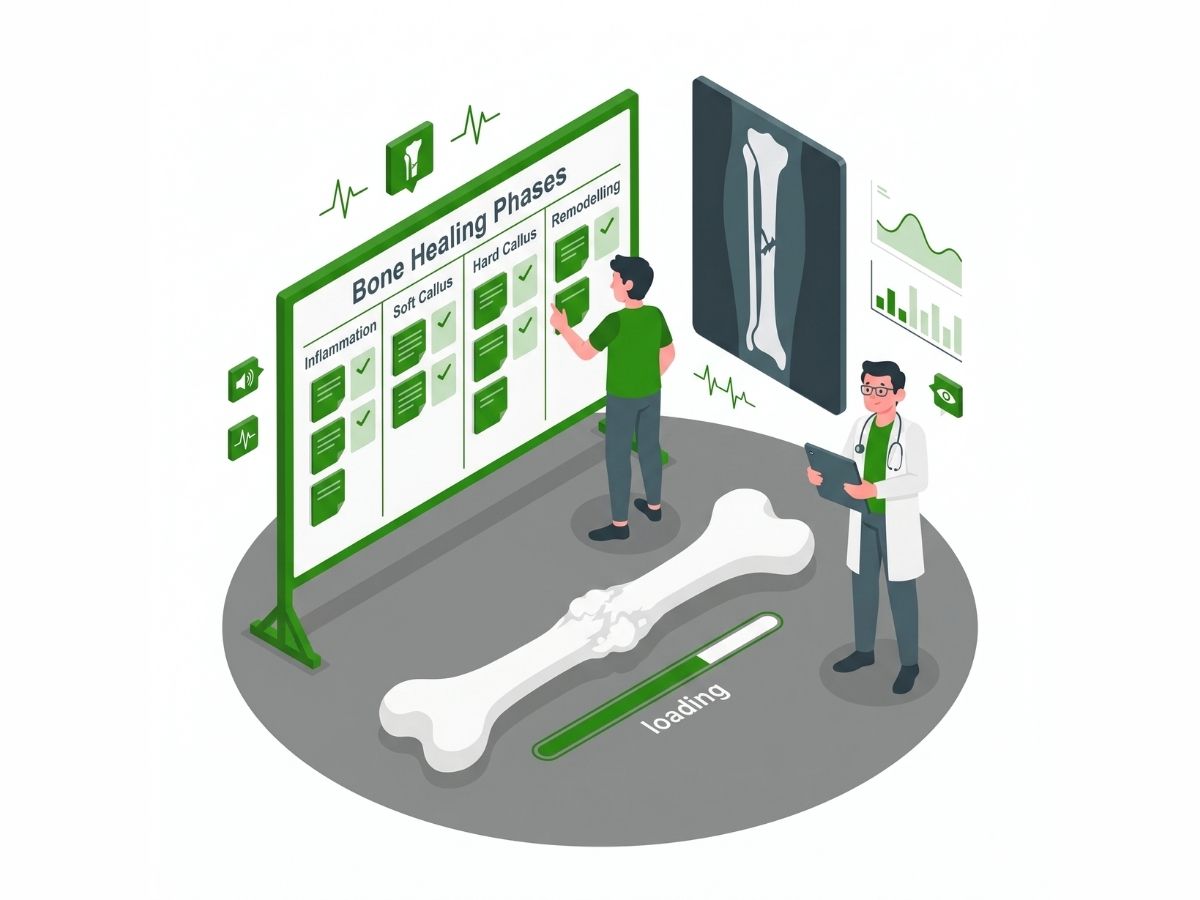
The Pathophysiology of a Stress Fracture and how does it happen?
Fundamentally your bones are there to provide structure , nutrients and a scaffold for all our other structures to surround and operate in. They need to be strong , well fed and have the power to cope with all the demands you place on them every single day. Bones are in a constant match for match cycle by which bone is being broken down and replaced , this is known as bone homeostasis and ensures that your bones are never tired and always ready to be loaded in any capacity you require them to.
Every time you walk , run or jump your bone undergoes strain. This is normal as the load coming through your bones result in minor microscopic strains inside the bone itself. This is needed and necessary in order for new bone to regrow. As your body identifies the small strains it then sends a specific type of bone cell called osteoclasts to the site of strain and their job is to remove the damaged bone in order for the next phase to occur. This process is fast and usually occurs within 3 – 7 days.
Next up we have osteoblasts who arrive and their job is to reinforce and repair. They lay down new bone and this process usually takes a bit longer (usually weeks to months). Now evidence shows that between week 3 & 4 there is a critical vulnerability window whereby the osteoclasts have finished clearing out old bone, but the osteoblasts haven’t finished reinforcing it. This leaves the bone temporarily more softer and therefore structurally weaker than before which opens up the window for bone stress fractures to occur.
Intensive training or an uptake in your performance leads to bone breaking down faster than what it’s being replaced. This mismatch is what ultimately leads to a bone stress fracture. By continuing loading / training the small microscopic strains slowly multiplies into many microscopic strains. The first phase is bone oedema or periosteal swelling – simple swelling on the outside lining of the bone.
You then continue training through pain and the second phase is a stress reaction (not a fracture) , the swelling has now moved into the bone cavity and not only on the outside of your bone. Lets say you continue being Hulk , which inevitably leads to to the final phase with is a bone stress fracture. The initial microscopic strains have now developed into cortical cracks which is a fracture line going through the hard outside of the bone itself aka a bine stress fracture.
The internal bleeding , soft tissue scarring and cellular disruption caused by a bone stress fracture will directly affect how long it takes to recover and regain bone strength and full functionality again. Furthermore , secondary injuries sustained to the surrounding structures such as a muscular tear , nerve irritation or ligament sprains will also add to the healing process as a high grade bone stress fracture rarely occurs in isolation.
Symptoms of a Stress Fracture
.
How severe is my Stress Fracture?
Bone stress fracture can vary in how they present , the type of symptoms they present with and how severe they can be. These are primarily dependant on the location and risk relation to your functional capacity and range from a “small” bone stress fracture such as tibial stress fracture to a more “severe” bone stress fracture such as a femoral neck stress fracture. Lets go through some details that will enable you to gauge just about where you fall in the spectrum of “less severe” to “most severe”.
Lets use a simple example of running 10km daily for 4 days of the week , you begin noticing a pain on your shin bone after your daily jog. You think nothing of it and continue loading yourself over the next few days. The pain is dull and aches and you notice that the intensity increases once you’re running but also decreases when you not. You decide to rest for a week and then get into it again , although as you begin loading – the pain almost immediately returns. The pain is localised to your shin bone with slight swelling around the area as well as some stiffness in your knee and ankle joint. These are all simple clinical signs and symptoms that you could potentially have a tibial bone stress fracture.
Keeping with the same example , you have now pushed yourself and continue loading through some “mild” discomfort. You are now on your rest week and the pain is now constant and has not resolved , the dull ache has spread throughout your leg and cannot help to think that this was only a muscle injury anymore. The swelling has gotten worse are you’ve even begun seeing a slight discoloured hue around your leg. Generating power and strength is painful and functional tasks such as walking or standing is extremely painful. Sleeping is an issue unless you get the aid of some medication just to ease off the symptoms. These are some clinical signs and symptoms of a more severe bone stress fracture.
The golden standard of identifying how severe your bone stress fractures are via location and an MRI. These grading can be divided into 4 Grades , from Mild stress reaction (Grade 1) to a bone fracture (Grade 4).
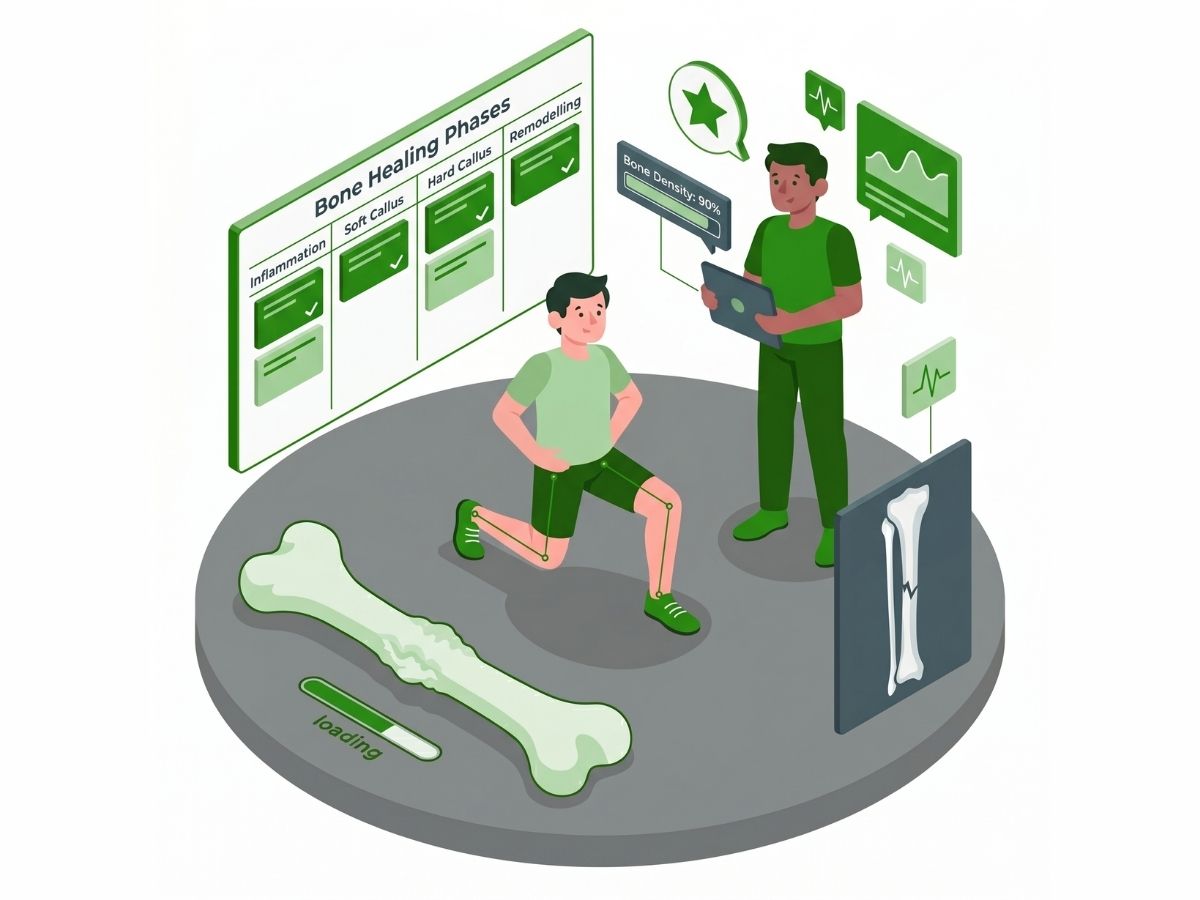
Diagnosis
Physiotherapy diagnosis
With our professional expertise and clinical knowledge we can make the Physiotherapy diagnoses for your bone stress fracture a easy , uncomplicated and well understood process. We are skilled enough to calmly guide you through a structured assessment process whereby we can confirm or even rule out a bone stress fracture.
Bone stress fractures are easy to misdiagnose , fortunately we are able to isolate and break down the affected bone and corresponding complications in order to get the best possible clinical presentation of you. Lets have a look at the thorough steps we will guide you through as we identify and confirm your bone stress fracture:
Subjective Assessment
Getting an idea of the events and mechanism of injury leading up to your bone stress fracture aids us to get a better understanding of your symptoms , severity and history. We’ll be sure to get through any previous injuries , chronic conditions you may have as well as going through your training program as these markers gives us further insight into your path that lead you to us. The better we are able to understand this , the better and easier we are able to plan your rehabilitative journey. Another important aspect of this is to go through your goals and expectations as we strive towards getting you back into the tasks that are important to you within a realistic and objective approach.
Physical Assessment
This is where we assess your physical ability in relation to your bone stress fracture. By using a variety of special tests to ensure we get the best clinical picture of your bone stress fracture , we are abled and skilled enough to break down and simplify our assessment approach into tests that isolate and assess your joint , bone , ligament , tendon and muscles.
Once we able to objectively tick these boxes we are now able to successfully commence your rehabilitative journey. If we suspect any further investigations , we are able to provide you with a referral to get it done. We are proactive in our approach and pride ourselves in taking responsibility as your primary health care provider.
We understand how the body works and know how to mitigate any secondary issues that may arise when having a bone stress fracture. Allow us to take on that responsibility while you focus on a structured rehabilitation program to get you back to your best.
X-rays
X-rays are the mainstay in diagnosing a bone stress fracture. Nerves cannot be seen seen on an x-ray, so it will not be effective in diagnosing a nerve injury. X-rays will however show the integrity and alignment of any affected joints or bone in relation to your nerve injury. This is only validated if you had a traumatic accident and would like to rule out any bone fractures.
Your physiotherapist can refer you to get x-rays taken if necessary.
Diagnostic Electromyography (EMG)
An EMG along allows us to see exactly where the nerve is damaged , the severity of it and to what extent it’s hampering your functional fallout.
By assessing the ability of your nerve to conduct signals to a specific muscle , we are able to assess how much signal is being conducted through the nerve by assessing the muscle it innervates.
We are able to perform a EMG at our expert practice.
MRI
Known as a MR neurography , this type of MRI scan has the ability to zone out other structures in order to isolate and view nerves. This allows us to see the extent of nerve damage , compress or tear of the nerve itself as well as any surrounding structures.
If your physiotherapist suspects a MRI is needed , we are able to refer you to the right specialist.
Why is the pain not going away?
The healing journey of a nerve injury can be an extremely complex process. Unlike other structures in your body where you can get away with no treatment (such as a simple muscle strain) , even the simplest nerve injury needs to be attended to. Nerve rehabilitation needs to be a guided process and not a “wait and see” process. There are numerous factors that needs to be understood effectively and managed in order for your nerve injury to heal correctly. Lets explore some of these issues as to why your pain is just not resolving.
The severity of your nerve injury directly affects the healing time. The more intense the nerve injury , the more time it will take for regeneration of the nerve axon and epineurium which is essentially the blueprint of recovery for a nerve. Now if your nerve has been completely cut and you have not found intervention , the nerve ends will not connect by themselves. This inevitably means there is no pathway for the regenerating nerve ends to follow or transmit a signal , which will result in you still being in severe pain and at a functional loss.
Scar tissue formation and disorganized fibrous tissue is what you can expect in a untreated nerve injury. This is a massive roadblock in your healing journey as when your injured nerve attempts to heal without proper guidance, the regenerating tissue fibers will grow , but in a way that is not aligned with your natural tissue formation. These usually manifest in a painful mass of nerve tissue called a neuroma which not only prevents functional recovery but also becomes a source of chronic pain and joint stiffness.
Nerves innervate muscles and when a muscle loses its nerve supply, it begins to waste away (atrophy). The “use it or lose it” model comes into affects as if your nerve does not regrow and reconnect with its target muscle within about 12 to 18 months, the connection between the nerve and muscle dies off permanently. This makes your full recovery extremely difficult as even if your nerve fully regenerates, it has no viable muscle to control, and the loss of function becomes irreversible.
We are experts at preventing and setting you on a path to correct these complications before they become permanent. Do not let it worsen or restrict you from the basic daily activities that you should be able to do. Have us guide you through this journey with care , passion and clinical mastery.
Problems we see when patients come to us with a Stress Fracture
Complications arising from nerve injuries are extremely common in clinical practice. We have experience and skill in identifying any shortfalls in your recovery and more importantly , find out why you still have neuropathic pain , even though you may have “recovered” already. These misconceptions and shortfalls about nerve recovery is popular amongst individuals who do not seek the correct intervention or have simply just not had the best care given. Below are some of the issues we see in clinical practice , which ultimately delays the rehabilitation progress as the secondary complications have now taken a front seat which means that more time needs to be spent on these issues before getting to the actual nerve injury itself.
Misdiagnoses can lead to more damage than good. Understanding the difference and being able to differentiate between a nociceptive or neuropathic pain is clinically , the first step that needs to be correctly identified when dealing with a nerve injury. Misdiagnoses whereby individuals who seem to think its just a muscle or a stiff joint often leads to further complications later in their recovery and more importantly , delays the prognosis even more. The nerve gets further damaged as it was never identified as being the root cause of your pain.
Muscle wasting or atrophy is common in all nerve injuries. As the nerve innervates the muscle , the electrical signal cannot reach the muscle fibres. This leads to the muscle not being used sufficiently and “use it or lose it” comes to play. This is also found in individuals who waited too long to get it seen to as the muscle atrophy , stiffness and pain only gets worse as the nerve conduction to the muscle is limited.
Chronic pain is often seen as a consequence of ill treated nerve injuries. Complex regional pain syndrome (CRPS) is a popular type of syndrome we see in individuals , whereby the amount of joint stiffness , neuropathic pain and swelling is disproportionate to the initial injury. This is usually accompanied by loss of sensation , motor control and limited functional abilities.
Physiotherapy treatment
Within our domain , we are absolute professionals and experts as we strive ourselves on our ability when it comes to the clinical assessment and treatment protocols we use to treat nerve injuries. We are confident , systematic and use a guided approach to establish the extent of your nerve injury and any secondary issues it has caused on the interface surrounding it. We can ensure that you get the best treatment and care while we use an array of different modalities and techniques to aid you through your rehabilitative journey.
We begin by assessing and confirming the extent of your nerve injury. This is achieved by undergoing our thorough assessment protocols whereby we not only focus on your nerve in isolation but also on the associated joint and muscle. Once we’re able to assess the severity and get a clinical diagnoses we can then proceed on a plan of action. Primarily this is focused on accelerating axonal regeneration and improving nerve conduction , we would also want to decrease any inflammation surrounding the nerve tissue as well as improving muscular interfaces and joint mobility.
We are experts in our field and have extensive experience in achieving a better improved functional outcome based on your objectives. We are able to make us of a variety of refreshing and clinically sound treatment protocols. Allow us to get you back to where you need to be , in the most timely manner possible.
Phases of rehabilitation
Evidence shows that in most severe nerve injuries a full functional return is obtained in 40%- 60% of individuals. Fortunately we know how to optimally load your nerve injury and help you through a clinically orientated rehabilitation program. Our rehabilitation encompasses a 5 Physiotherapy phased approach whereby we lay a foundation to build upon. We focus on the optimal amount of loading that ensures your rehabilitation journey is smooth , effective and clinically at the highest level. We are able to navigate your journey through a systematic approach whereby we plan , intervene and progress you according to your set objectives as nerve injury prognosis differ amongst each of us.
1st Phase: Educate , unload and rest (Week 0 – 2)
Rest and educate
Healing and resting is imperative in the first phase. Here we will take the time to listen and educate you on how to best manage and mitigate any flare up’s that will occur within relation to your nerve injury. Simple yet effective protocols will be administered whereby we educate you on how to keep the affected joint elevated , protected and how to still be functional in these early days. The better you understand your nerve injury , the easier it is manage and know why some symptoms are present. Healing from a nerve injuries takes time and by equipping you with the correct advice and necessary tools for recovery , we are able to create the ideal environment for healing.
Medication
Weaning you off medication as soon as possible is always what we strive throughout the phases of rehabilitation. Nerve medication can be tricky if you do not know what is appropriate and which is not. We would always want to prevent any secondary issues that can inhibit your recovery time such as stomach ulcers , constipation or drowsiness. We are experts at weaning you off your medication and will safely advise you how to go about doing so and which type of medication to seek in order to aid your recovery from your nerve injury.
Mobilisation and muscles
If you’re on crutches or in a upper limb cast , we will advise you on how to safely mobilise , ensuring that you do not have any accidents. Within your pain threshold , we can gently start passive and active movements to slowly introduce movement back into the joint as well as beginning the slow process of nerve regeneration. Muscle strengthening exercise’s such as isometric contractions will be started at a very basic level to begin fibre contraction and blood flow into the affected limb as well as stimulation of the affected neural pathway.
By managing the first stage of nerve healing , we can then move onto the second level of rehabilitation provided you should be able to:
- Functionally mobilise effectively without any fear and limited pain.
- Note a objective decrease in pain, swelling and tenderness around the affected nerve injury site.
- Able to hold a isometric muscle exercise for at least 3 reps (3 sets) of 10 seconds.
2nd Phase: Neural Stimulation (Week 2 – 6)
As the inflammatory stage has now been managed successfully we can now begin slowly implementing protocols that further optimally stimulate your affected neural pathway. By allowing oxygenated blood flow via modalities such as laser therapy and trans-electrical stimulation therapy we can enhance the healing process of your nerve injury. By using an array of specific loading strategies , we can also begin on mobilising any scar tissue , muscle stiffness and joint restrictions to allow unrestricted healing and ensuring that the nerve is targeted in isolation. Sensory re-training begins in this phase should you present with any deficits in your sensory capacity.
By the end of this phase you should be able to:
- Stimulate your affected nerve pathway within your pain limitation.
- Have full range of motion of your affected joint.
- Swelling and discolouration resolved.
3rd Phase: Re-gain , remodel & re-strengthen (Week 6 -12)
In this stage your nerve injury and associated affected structures will be able to withstand more load and stresses coming through it. Building on this we can begin more intense active movement of the affected area. Nerve stimulation and centralisation will continue via active and passive modalities such as nerve gliders as well as concentric muscular stimulation in order to regain control , strength and nerve conduction. Focus is primarily paid to promoting further functional capacity such as integrating into driving and gym training.
By the end of this phase you should be able to:
- Limited or less intensive neurological pain and referral nerve pain.
- Perform a pain free contraction through movement of at least 6 repetitions of 3 sets.
- Integrate into further functional activities such as driving and gym training.
- Able to perform simple body weight exercise’s such as a squat or modified push up within boundaries.
4th Phase: Continuation of 3rd phase (Week 12 – 18)
As we approach the final phase of your nerve injury, we begin to focus at integrating you back into your end stage objectives. Thus meaning increasing your rehabilitation load with focus on furthering your strength , nerve centralisation as well as your joint mobility. We are now able to continue building up the tensile resilience of your nerve injury and musculature as we approach the final clearance phase. We continue with the use of our passive and active modalities while progressing you accordingly in your rehabilitation program. By the end of this phase you should be able to:
- Have fully integrated back into simple functional exercises without any pain.
- Returned to training / gym within your limitations.
- Minimal to no pain with exercises or movement patterns.
- Complete nerve sensitisation with limited to no pain.
- Return of your sensory capacity and muscle strength.
5th Phase: Test return to normal life (Week 18 – 24)
Phase 5 marks the end stage and tail end of your rehabilitation journey. Here we can begin preparing you for a full unrestricted return to the activities you love. Although this can take longer than 18 weeks (up to 32 weeks in some instances) this is a brief outline of where you should be. In order to ensure that your nerve injury is stable , conducting and pain free, we are now able to test , stress and retest in phase 5. This is imperative before making a full return to your activities as without it , you will not have the confidence and peace of mind needed to perform at your highest level of function.
By the end of this phase you should be able to:
- Know which movements and exercises are important for you to ensure you maintain your progress.
- Fully integrated back into your activities without any pain or discomfort.
- Have the confidence in your ability to perform at your highest capacity again.
- Have integrated into higher end stage exercises such as throwing , running and playing sport.
Flare up’s will be common as you go through your rehabilitation journey. This does not mean that the work you’ve done is for nothing but merely a indication of the threshold of your nerve injury. Do not get despondent by it , trust the process and allow us to guide you through it with ease and confidence.
Healing time & other forms of treatment
Following a peripheral nerve injury , research shows that the average rate of nerve regeneration is about 1 to 3mm per day. This can be equated to about 2.5cm a month! This is not a lot of growth and therefore the total recovery time for more severe injuries is directly related to the distance the nerve must regrow. Additionally , age plays an important factor in your healing as younger individuals have a stronger chance of healing faster. The location of your nerve injury is also pivotal in your recovery as nerves injured closer to your affected muscle will regrow faster as it’s less distance compared to a longer nerve that innervates a further muscle. Direct clean cuts to your nerve usually heals easier than a stretching or crushing type of nerve injury. Lastly , timed intervention also plays a part in your prognosis. Muscles that are innervated by your affected nerve will begin to waste away if the nerve has not been treated , therefore leaving you with functionally decreased abilities and massive muscle atrophy.
Lets go through the details of each nerve injury and how it affects your healing time.
- Neurapraxia: Graded on the Sunderland score as a Gr1 nerve injury , these are considered to be the mildest form of injury. Basically the nerves signal or conduction is blocked but the nerve itself is usually unharmed. Recovery is spontaneous and nerve conduction typically occurs within 0 – 12 weeks.
- Axonotmesis: When the axon of the nerve is damaged , it’s considered a medium / moderate injury and is graded as a Gr2 injury on the Sunderland score sheet. As the axon of the nerve is damaged , the nerve still has it’s protective outer layer in tact which is imperative to healing as this can guide the regrowth of the nerve and axon. Healing is slow , but expected although the time frame associated with it can take months up to a year depending on the injured site.
- Neurotmesis Grade 3 , 4 & 5: These are considered severe injuries as the entire nerve has been incomplete or completely ruptured. As the internal structure of the nerve itself has been damaged , the scarring tissue , nerve endings and conduction needs time to regain it’s capabilities. Spontaneous recovery is not possible , therefore even after successful surgery , rehabilitation is often anticipated to take months and often years to heal.
As we continue to strive towards giving you the best care we possible can, lets have a look at some of our strong alternative and additional forms of treatment that can aid us in your rehabilitation journey:
- If need be , a referral to your local GP will aid us in the appropriate medication for your healing and rehabilitation process. Nerve injuries require a specific type of medication as the usual anti-inflammatories would not work (Ibuprofen or Paracetamol). We are able to guid you into which of these medications are needed.
- Splints and braces can be used to manage the consequences of muscle imbalance and to improve function without the flare up of nerve symptoms. Be keeping the affected joint in a neutral position , we can prevent further damage to your nerve injury , improve your functional in your day to day activities and more importantly – protect the structure by keeping it immobilised.
- Electrical neurostimulation – In order to “kickstart” your axon and nerve regeneration we are able to treat and rehabilitate this effectively by applying a low frequency trans electrical stimulation along your nerve pathways. Research has shown that providing a charge of 20Hz current for one hour to the nerve proximal to the repair site has great effects by increasing intracellular levels and shows significant acceleration of axonal regeneration and earlier innervation of targeted muscles.
Is surgery an option?
Surgical intervention for a stress fracture is not too common. It
nerve injury is mainly dependant on the type of nerve injury, severity of the injury and the prognosis of the nerve healing on it’s own. The goal of surgery for a nerve injury is to reattach the loose endings as to provide a stable pathway for conduction to take place. Lets have a look at some of the clinical signs that are indicated for a surgery:
A high grade injury such as a Grade 4 or 5 on the Sunderland nerve injury score sheet is a massive indication for surgery as the nerve has completely torn or ruptured and the indications for it healing independently are near impossible. Furthermore , even on a Grade 3 score , if a conservative approach has failed after a period of at least 6 months , surgery would be considered by the surgeon as to determine the return of function of the injured nerve.
In certain instances surgery is needed immediately to restore the injured nerve’s pathways. Lets have a brief look at what this entails:
- Direct trauma – Sharp cuts such as a knife or massive lacerations to your limb will require surgery as these types of injuries usually completely or partially sever’s the nerve itself.
- Tumor – Benign or malignant tumor’s can directly compress the nerve therefore surgery would be aimed at removing the tumor as well as repairing any nerve damage the tumor has caused.
- Wounds , crushing or scarring injuries – Traumatic injuries that compress , stretch and infect the nerve beyond repair needs to be removed so that the nerve can be realigned and begin regenerating.
The different type of surgeries will also vary dependant on what needs to be achieved. Below is a brief outline on the different types of surgeries for your nerve injury:
- Autografts – Using your own body’s tissue and a donor nerve is what makes this type of surgery the preferred choice of nerve surgery. By harvesting a donor nerve in your body , a surgeon is able to use it to fill in the gap of your injured nerve , allowing natural healing to occur.
- Allografts – When a autograft is not available , another type of surgery is where a nerve is taken from another human donor (usually a cadaver). This is then processed until it’s appropriate and then used to fill in th gap of the injured nerve.
- Nerve Conduits – These are used for smaller nerve injuries (3cm or below) whereby a artificial hollow tube is sutured at the end of the injured nerve stumps. This then provides a safe conduction “tunnel” for the nerve axon to regenerate and heal.
- Neurorrhapahy – This term refers to a direct end to end repair when the nerve has been completed cut in two. The surgeon is able to trim away the injured nerve endings and tissue , ensuring the healthy ends are reattached with precision and without any tension on the nerve as this way hinder the healing abilities of your injured nerve.
Surgery is merely the first step in a rehabilitation journey as we will then guide you through your unique post-operative rehabilitation program , whereby we strive to get the nerve to regenerate , desensitise and conduct efficiently.
What else could it be?
- Bone contusion – – Bruising of the bone itself due to trauma. Can be misdiagnosed as a bone fracture.
- Degenerative Joint Disease – Inflammatory diseases such as osteoarthritis causes swelling , pain and bone deformities which can be mistaken for a bone fracture.
- Neuritis – Inflammation of a nerve due to injury.
- Joint sprain – Injury to joint ligaments.
- Muscle strain – Torn fibres of the muscle tissue.
Also known as
- Hairline Fracture
- Fatigue Fracture
- Fissure Fracture
- March Fracture (In foot)
